
Forum
Market
- Løpsemne cal 50
- Kuletang 45lC
- 8mm Kongsberg Rolling Block
- Hylser til 12,17x44r
- Winchester 1886
- Ruger Old Army kal.45
- Parker Hale Enfield
On this day
17 October 1861
The Cullin-la-ringo massacre or Wills Tragedy occurred north of modern-day Springsure in Central Queensland on 17 October 1861. It remains the largest massacre of white settlers by Aborigines in Australian history, and a pivotal moment in the... Read more ...
The Cullin-la-ringo massacre
The Cullin-la-ringo massacre or Wills Tragedy occurred north of modern-day Springsure in Central Queensland on 17 October 1861. It remains the largest massacre of white settlers by Aborigines in Australian history, and a pivotal moment in the frontier wars in Queensland
In mid October 1861, a squatter party from the colony of Victoria under Horatio Wills began a temporary tent camp to start the process of setting up the grazing property of Cullin-la-ringo. Wills's party, an enormous settlement train including bullock wagons and more than 10,000 sheep, had set out from Brisbane eight months earlier to set up a farm at Cullin-la-ringo, a property formed by amalgamating four blocks of land with a total area of 260 square kilometres (64,000 acres). The size of the group had attracted much attention from other settlers, as well as the indigenous people.
According to the account of one of the survivors, John Moore, Aborigines had been passing through the camp all day on 17 October 1861, building up numbers until there were at least 50. Then, without warning, they attacked, murdering all the men, women and children with nulla nullas. The settlers defended themselves with pistols and tent poles, but nineteen of the twenty-five defenders were killed.
Featured article
Most old military longarms had sling swivels, but their original leather slings are usually long gone. Replica firearms are rarely sold with slings, but making a sling that fits you and your musket or rifle is pretty simple. This article shows you how to do it.
Making a Target or Carrying Sling
Making Bismuth Shot
 About
About Les artikkel på norsk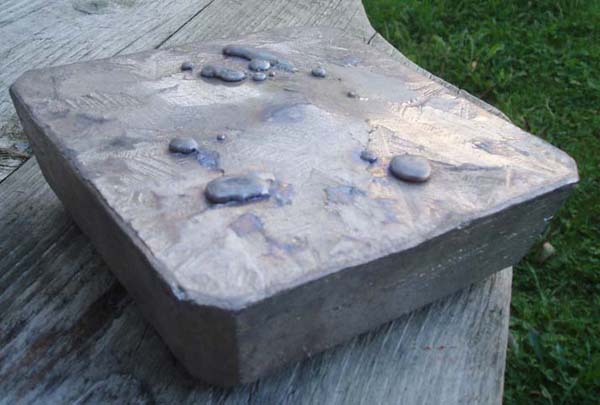
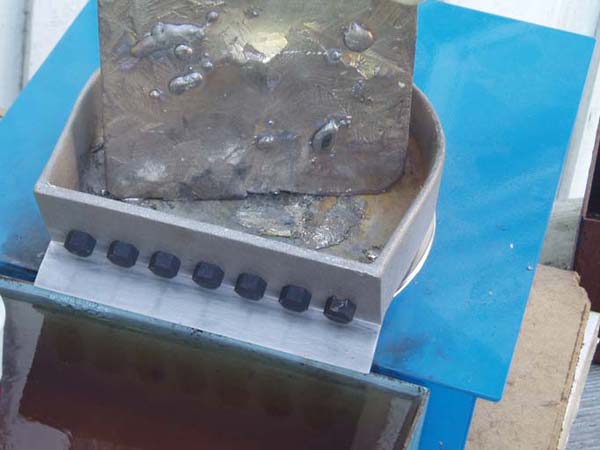
The bismuth and the Shotmaker.
The ten kilos were sent to me because I’m the owner of a Shotmaker. When making bismuth shot I used the same setups as I normally use when making lead shot. The bismuth we bought was 99.98 % pure, so the quality should be good enough.
Bismuth
Bismuth has a lower melting point compared to lead. While lead melts at 621.50 °F (327.5 °C) bismuth only needs 520.34 °F (271.3 °C) to melt. The test with the ten kilos of bismuth shows that it is possible to make good quality bismuth shot in the Shotmaker. The shot appeared to be just as good as the lead shot the Shotmaker spits out, perhaps even better.
Find out more!
You can learn more about muzzle-loading and black powder cartridge shotguns and shotmaking in the brand new book From Musket to Metallic Cartridge: A Practical History of Black Powder Firearms.
Of problems, the following can be noted:
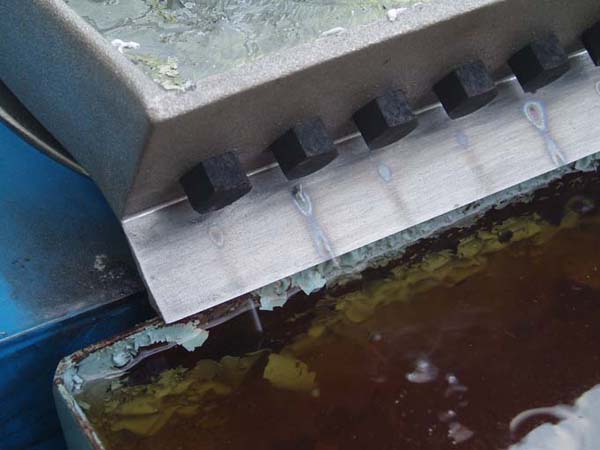
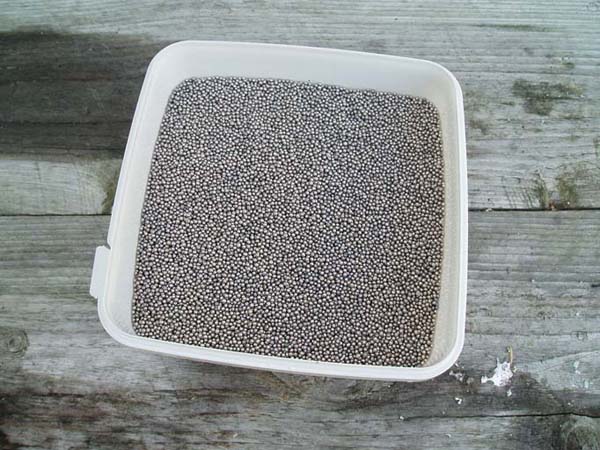
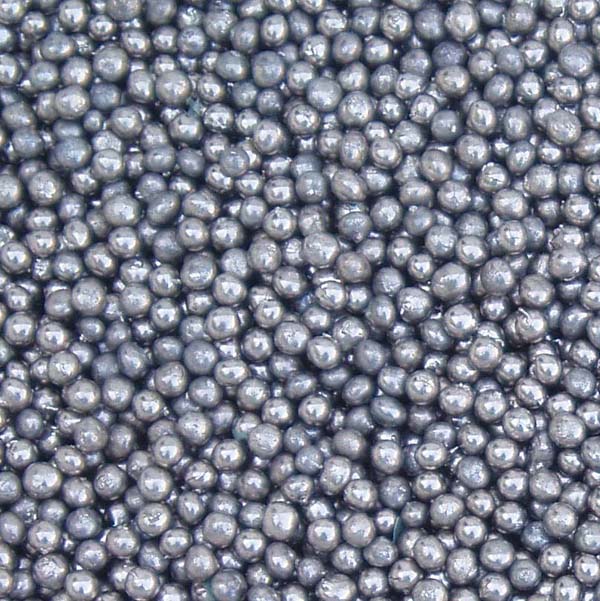
The dripping was a bit slow, but the shot was ok.
It is possible that making the shot in a less windy condition would have solved this problem. When the temperature began dropping during the night I set up a provisional windbreak and put a homemade lid on the ladle. This seemed to help a bit. It is possible that it simply was too cold for the Shotmaker to function optimal as wind cools down the heating elements in the Shotmaker.
Click to see movie!
For more information about making shot, see the article about the Shotmaker.