
Forum
Market
- Diesett M71 til Rollingblock pistol kal 50
- Perk børse konkurranse
- Flintlåspistol Cal. 44
- Chrony Beta
- Remington Derringer 41 rimfire
- Remington revolver
- Replikasikte for kammerlader
On this day
25 May 1676
The Gyldenløve War began with the naval battle off Bornholm. The battle was the first maritime clash of the conflict between Denmark-Norway and Sweden, also known as the Scanian War. During the battle, Denmark-Norway mustered 18 ships of the line,... Read more ...
The naval battle off Bornholm began the Gyldenløve War
The Gyldenløve War began with the naval battle off Bornholm. The battle was the first maritime clash of the conflict between Denmark-Norway and Sweden, also known as the Scanian War. During the battle, Denmark-Norway mustered 18 ships of the line, 8 frigates and 9 smaller vessels, including 8 Dutch ships, with 1,249 guns and 6,000 men on board. The Swedes had 52 ships of the line and frigates, as well as several smaller craft, with around 2,180 guns and 11,870 men on board.
Featured article
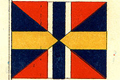
A special year for Norway, 2014 both marks the bicentenary of the Norwegian constitution and – perhaps slightly less celebrated – the beginning of the union with Sweden. This article presents the military black powder small-arms that were used in the 91 year long Norwegian-Swedish union 1814–1905.
The Guns of the Union (1814-1905)
Exploded View of a Flintlock Musket
 About
About Les artikkel på norsk
The smoothbore military flintlock musket was the standard infantry firearm for hundreds of years before the percussion muskets and breech-loading rifles took over from the mid-1850s. The Norwegian Army received muskets from Denmark during the union years, but after the union with Denmark fell apart and another union was established with Sweden in 1814, the Norwegians started their own firearms production at Kongsberg. A typical Norwegian-Danish musket looked like this:
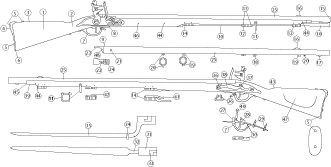
- Butt
- Wrist
- Comb
- Heel
- Butt plate with screws
- Toe
- Trigger guard
- Flint lock
- Barrel breech
- Ramrod
- Front sling swivel with screw
- Thimble
- Thimble pins
- Entry thimble
- Muzzle
- Front sight
- Bayonet lug
- Ear for the sling swivel screw
- Double ear — pin ear — for securing the thimbles
- Single ear- pin ear - for securing the barrel to the stock
- Flash hole
- Rear sight notch
- Tang
- Breech plug
- Barrel
- Rear sling swivel with screw
- Ramrod stopper
- Trigger
- Trigger guard screws
- Trigger assembly
- Bayonet socket
- Elbow
- Bayonet lug slot
- Shoulder
- Triangular blade
- Front side plate screw
- Rear side plate screw
- Side plate
- Muzzle cap
- Tang screw
- Brake spring for the ramrod
- Back of the thimble
- Butt nose
- Barrel pin
- Butt nose
- Fore-stock
- Cheek piece
- Breech plug
Find out more!
You can learn more about the history and practical use of smooth-bore flintlock and percussion muskets in the brand new book From Musket to Metallic Cartridge: A Practical History of Black Powder Firearms.